Review spelling, line clarity, and grade fit before classroom use.
We’ll show download buttons here when the worksheet is ready.
Key facts about farm animals coloring pages
• Best for: animal sounds lessons, farm vocabulary, classroom centers, read-aloud extensions, field trip follow-up, early finishers, and homeschool farm weeks.
• Common subjects: cow, pig, sheep, horse, chicken, duck, goat, dog, cat, barn, tractor, fence, hay bale, and field.
• Output goal: printable black-and-white farm animal line art with thick outlines, simple scenes, and enough space for crayons.
• Kindergarten rule: use one to three main subjects per page, such as cow plus barn or pig plus fence.
• Label rule: labels and animal sounds can support vocabulary, but adults should check spelling and spacing.
• Safety rule: avoid logos, named/franchise characters, real student information, child photos, and overly detailed scenes.
Farm Animal Coloring Page Prompt Ideas
Use these farm prompt cards for printable K-2 worksheets, animal sounds lessons, vocabulary centers, and homeschool farm units.
Kindergarten Farm Animals
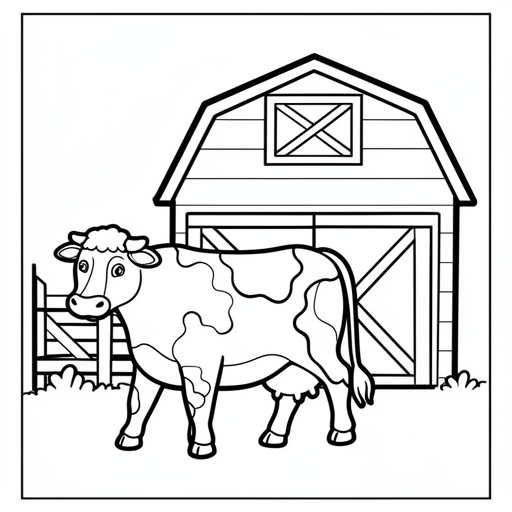
Use a simple cow and barn page for young learners.
Kindergarten farm animals coloring page with one cow, one barn, one chicken, and a sun, thick black outlines, large open spaces, simple printable black-and-white line art, no logos, no named characters.
First Grade Farm Labels
Use labels to support farm vocabulary.
First grade farm animal coloring worksheet with cow, pig, sheep, and horse, simple labels under each animal, thick black outlines, clear spacing, printable black-and-white line art.
Animal Sounds Center
Pair animals with short sound words for a center activity.
Kindergarten animal sounds coloring worksheet with cow moo, duck quack, sheep baa, and pig oink, simple icons and labels, thick outlines, large open spaces, printable line art.
Farm Field Trip Follow-Up
Use this after a farm visit or farm-themed lesson.
First grade farm field trip follow-up coloring worksheet with barn, tractor, cow, chicken, and hay bale, simple labels, clear open spaces, black-and-white printable line art.
Homeschool Farm Week
Use a calm scene for a farm unit binder.
Homeschool farm week coloring worksheet with horse, sheep, goat, fence, and field, calm simple scene, thick black outlines, no crowded background, printable line art.
Second Grade Farm Vocabulary
Use a broader scene with reviewed labels for older K-2 learners.
Second grade farm vocabulary coloring worksheet with barn, tractor, fence, hay bale, cow, and goat, short labels, thick black outlines, balanced open spaces, printable black-and-white line art, no tiny texture details.
Printable farm animals coloring pages for classroom use
Farm animal coloring pages are useful when children are learning animal names, sounds, simple farm vocabulary, food-origin ideas, or community-helper connections. Use them for kindergarten centers, morning work, read-aloud extensions, early finisher folders, substitute plans, and homeschool farm weeks. Keep pages simple enough to print clearly and easy enough for young learners to color.
Animal sounds and vocabulary
Add short labels such as Cow, Pig, Sheep, Horse, Chicken, Duck, Goat, Barn, and Tractor. Animal-sound labels can support quick center activities when spelling is reviewed.
Centers, morning work, and early finishers
Farm coloring pages work well as calm independent work because the subjects are familiar and easy to recognize.
Homeschool farm week
Place farm pages in a unit binder with a read-aloud, farm visit reflection, food-origin discussion, or simple animal sorting activity.
• Use farm pages for animal sounds and vocabulary review.
• Pair pages with read-alouds, songs, field trips, or farm unit discussions.
• Keep kindergarten pages broad and uncluttered.
• Review every page before printing for class or homeschool use.
Farm animals and objects to include
A strong farm prompt uses familiar animals and simple objects rather than a crowded barnyard poster. Choose a small subject list and describe the page style clearly. For kindergarten, one large animal plus one simple farm object often works better than many animals on one page.
Cow, pig, sheep, horse, chicken, and duck
These familiar farm animals work well for single-object pages, animal-sound pages, and label plus coloring worksheets.
Barn, tractor, fence, hay, and field scenes
Use farm objects as simple context, not as dense background detail. A barn and fence can frame the page without making it too busy.
Simple pages for kindergarten
Use thick outlines, one to three subjects, and large open spaces. Avoid small feathers, hay textures, crowded fences, or tiny background objects.
• Cow
• Pig
• Sheep
• Horse
• Chicken
• Duck
• Goat
• Dog
• Cat
• Barn
• Tractor
• Fence
• Hay bale
• Field
Farm animal coloring page prompt ideas
Farm prompts should tell the generator what the worksheet is for: vocabulary, animal sounds, a field trip follow-up, or a homeschool unit. Include the grade level, subject list, labels if needed, and print style. Ask for black-and-white line art and clear spaces for coloring.
• Use Kindergarten for one or two large subjects.
• Use First grade for simple labels and animal-sound pairs.
• Use Second grade for broader farm scenes or short vocabulary strips.
• Keep barnyard backgrounds light and uncluttered.
How to use farm animal worksheets in lessons
Farm animal worksheets can support several lesson routines without requiring a complex workbook. Teachers can use one page as a vocabulary center, another as a read-aloud extension, and another as a field trip reflection. Homeschool parents can build a short farm week binder with animal names, sounds, and simple discussion prompts.
Read-aloud extension
A simple farm page can help students revisit settings and vocabulary from a farm-themed book without using named entertainment characters.
Vocabulary wall
Label pages can support words such as Cow, Pig, Sheep, Horse, Chicken, Duck, Goat, Barn, Tractor, Fence, and Hay.
Field trip follow-up
Use a farm scene with a barn, tractor, and one or two animals so students can discuss what they saw and color a calm follow-up page.
Sub plan activity
Reviewed farm animal pages are easy to place in a substitute folder because they require little setup and fit many early elementary classrooms.
• Read-aloud extension: color a cow, pig, sheep, or chicken after a farm book.
• Vocabulary wall: use label pages to introduce farm words.
• Field trip follow-up: let students color and talk about animals they observed.
• Sub plan activity: keep reviewed farm pages ready for independent work.
• Animal sounds lesson: match animal names with moo, baa, oink, quack, and neigh.
• Food-origin discussion: connect animals and farm objects to a simple K-2 topic.
Print and review checklist for farm animal pages
Farm scenes can become too busy if the prompt asks for every animal, a full barn, a tractor, a fence, hay, crops, and labels at once. Keep the worksheet focused and review the result before printing multiple copies.
• Is the animal recognizable?
• Are labels and animal sounds spelled correctly?
• Is the barn or tractor scene too crowded?
• Are outlines thick enough for crayons?
• Is there enough white space?
• Does the prompt avoid logos, named characters, and franchise wording?
• Has an adult reviewed the page before printing?
Unique classroom value on this farm resource
This page is a focused farm resource for animal sounds, farm vocabulary, field-trip follow-up, and kindergarten/K-2 center work. It is intentionally different from the broad animal hub and the ocean page: examples, prompt cards, and checklists center on familiar farm animals, barns, tractors, labels, and simple classroom routines.
• Farm-specific vocabulary and animal-sound use cases
• Kindergarten-friendly simplicity rules
• Field trip, read-aloud, sub-plan, and homeschool farm-week scenarios
• Review checks for labels, barns, tractors, fences, and crowded scenes
Create custom farm animals coloring pages with AI
Use the generator when you need a farm worksheet tailored to your lesson instead of a generic printable. Pick a grade level, choose a small subject list, decide whether labels or sounds are useful, and ask for clean black-and-white line art. Pack generation, output formats, download options, and saved history depend on the current product flow and plan limits.
• Start with a clear subject such as cow, pig, sheep, chicken, barn, or tractor.
• Add labels only when they support vocabulary or animal sounds.
• Ask for thick black outlines and large open spaces.
• Avoid crowded barnyard scenes and tiny details.
• Review the page before printing or sharing with children.
Real generated worksheet examples
These examples were generated from original classroom prompts and adult-reviewed before being added here.
They are printable coloring worksheets featuring ordinary farm subjects such as cows, pigs, sheep, horses, chickens, barns, tractors, fences, and hay bales. This page helps adults generate original farm pages for classroom or homeschool use.
Which farm animals should I include?
Start with familiar animals such as cow, pig, sheep, horse, chicken, duck, and goat. Add simple farm objects like a barn, tractor, fence, or hay bale when they support the lesson.
Are farm animal coloring pages good for kindergarten?
Yes, when they use large shapes, thick outlines, simple scenes, and only a few animals per page. Adults should review every page before using it with children.
Can I make farm animal coloring pages with labels?
Yes. Label plus coloring pages can support farm vocabulary, animal sounds, and early reading. Check spelling and spacing before printing.
Can I use farm animal pages for animal sounds lessons?
Yes. Use simple animal-and-sound pairs such as cow moo, duck quack, sheep baa, pig oink, and horse neigh, then keep the page uncluttered.
Can I download a whole farm animal pack?
Multi-page packs and bulk download workflows depend on plan limits, credits, supported output formats, and the current product flow. Review every page before printing a set.
What should I avoid in farm animal prompts?
Avoid named cartoon farms, franchise wording, logos, real student names, child photos, and overly detailed scenes that print poorly.
Create your first classroom worksheet
Start with a classroom topic, choose a grade, then review the page before using it.